The Power of Knowing
We don’t trust our intuition, our gut, that something is amiss. This is a basic, built-in prevalence in humans since the beginning of human life. It is as built into our DNA as fight-or-flight. It is part of our body’s protection for ourselves; what we can utilize to make our lives much more fulfilling, efficient, and successful. However, sadly, many of us have not learned to utilize and trust this most important gift.
For me, it is only recently that I have found the courage to really trust this sense and, more importantly, take action to keep myself in a joyful, happy state.
When I started studying mindfulness, healing, and self-love, I understood that these three attributes were necessary theories I needed to learn. I did learn them, they felt right, and I knew I needed to be more aware when situations occurred that were not a fit for me. However, when it came to DOING something about it, that was where the practice was lost. That proverbial drawing a line in the sand to situations, people, and events that did not serve me felt too overwhelming, so I continued to allow it all until it came crashing down, never in a good way.
The first time I tried taking action on my intuition, I was so befuddled. I had never done this before… what do I say? How do I say it? Will they get mad at me? Will they humiliate me for speaking up for myself?
That first time, I attempted it, but because the other person could sense my wobbly powerlessness, it didn’t end with me feeling like I had done the right thing. However, this most recent time, after so much more reflective time and healing of negative beliefs I had about who I am and how I fit into the world and what my value is, I was able to negotiate my self-representation in a mindful, calm, graceful, and professional manner. The result was filled with so many thoughts for me. I won’t say I was shocked, but in my head, I was saying to myself, “Wow, this feels so good and right. No matter what happens I feel good because this is the truth, and truth always wins.” I was able to move from the sense of it not being right for me to knowing it was not right for me.
Once you KNOW, you cannot just tolerate anymore. Once you KNOW, you must take action. Just as when you see the dark clouds in the sky and feel the wind blowing, you must take action to protect yourself from the oncoming storm. You KNOW what is about to happen, and you move to do the best thing for your safety and comfort. If you do not take action, you understand it becomes your choice.
Because I had healed my beliefs, I was able to present with calm confidence. This type of energy keeps all involved calm and allows all to listen without the distraction of emotion in the voice. My explanation was logical, nonemotional, and sensible, and therefore hit its mark. In a previous life, I would have been shaking about what they would be thinking. This time, however, I felt confident in my value and no matter what happened, it would all be good for me. To my surprise, they were professionally responsive to my account and asked for time to consider what I had said and rediscuss. I was preparing myself to leave within minutes of our conversation, so I was pleasantly surprised at the response, but I shouldn’t have been at all. I took care of myself, trusted my “knowing” that this was not going to be a good place for ME, took action that felt good, and was responded to in a positive manner.
The difference between this and either staying silent or being resistant and causing more problems by adding emotions into the mix was astonishing to this victim in recovery. Trusting what we know is right for us and then taking action confirms our inner knowing and serves our evolution as a mindful being in a very powerful, memorable way.
Mindfulness is not just about recognizing what is happening around us and how we relate to it. It is also the creation and building of new self-care skills that we did not have before, and the demonstration of this new realization that we are originally born as very loving beings. That is who we came here as. When we learn and put into practice the true gift of mindfulness in our everyday lives, we can take loving action to embrace the long-lost knowing of self-love.
__________
Patricia Heitz is a published author, teacher of mindfulness, Reiki master, Thrive mentor, and empowerment coach. Her book, Daydreams Come True, is a workbook helping you discover your beliefs and how to transform them from self-sabotaging to supporting what you want to have/be in your life. She has spent the last 20 years studying the mind–body connection, its relationship to disease, and how/why we sabotage.
After surviving kidney cancer, in 2002, she was determined to learn everything about how we contribute to disease in our body. What she discovered: it is always about our beliefs.
Having discovered her own self-sabotaging beliefs, and healing them, she has learned how to overcome, transform, and forgive.
She now lives a dream-come-true life and is dedicated to sharing her lessons learned so others may find their healing and wellness to live a life of thriving!

Five Pillars of Aging
Encore Entrepreneur: Renewal and Redesign
What does it take to launch a business as an aging adult? I can only answer that question for myself: optimism, obstinacy, and a desire to give back. I started my company, Five Pillars of Aging, in April 2019. In January 2020, COVID made its debut. It is now September 2022, and I am slogging through one of the most challenging economic downturns in recent history.
This has been a journey of renewal and redesign. I have found it to be exhilarating, frustrating, eye opening, bank depleting, terrifying, validating, and deeply satisfying. I have continued my education, albeit without the structure and rigor of an organized curriculum, and I am hopeful that I will successfully matriculate.
Now My Fourth Career
A brief review of my career path is like a “Where’s Waldo” challenge. I had no idea what I wanted to “do” when I graduated from college in 1975, but I knew I loved acting and performing. I supported my acting habit by using my typing skills to get me into jobs in advertising, sales, program development, and computer programming. The acting career didn’t pan out, although I continue to use skills I learned as a speaker and voice-over artist.
Lifeguarding, Teaching, and Falling in Love
Since I couldn’t make rent, I moved back in with my mother, and after a few months of moping around, she informed me that I would need to get a job. She suggested I become a lifeguard.
I needed to be certified in CPR, and in taking that class, I fell in love with the instructor (and eventually married him) who worked for the American Red Cross. I acquired skills as a water safety, boating, first aid, and CPR instructor, as well as a disaster responder, and became a skilled teacher and trainer.
All that exposed me to life circumstances where I saw people’s lives changed in an instant, and how strangers came to aid and support those in need selflessly and without question.
Crossing the Bar
My next career put me on an entirely different road of intellectual growth and professional development. Some unseen hand pushed or led me to a chance interview with the State Bar of California, where I fell in love with the law. I spent five years working with some of the finest legal minds in California, supporting and assisting them in the review and recommendation of proposed legislation and providing continuing education for members of the Bar. I spent another five years working as an estate planning paralegal for a major San Francisco law firm.
Personal Growth
Then came a personal growth weekend workshop that cracked open a fissure in my psyche. I had been a student of Buddhism and a meditation practitioner since my twenties, and I thought of myself as pretty balanced. Turned out, I had been “talking the talk” but not “walking the walk.”
Out of this experience, I realized I would need to make some changes if I were to embrace my authentic self. I returned to an early childhood affinity for seeking to understand what makes people tick, enrolled in the Institute of Transpersonal Psychology, and after a master’s degree and doctorate, I settled into practice as a psychologist working with elders.
How to Succeed in Business Without Really Trying (too hard)
Nowhere along the line did I ever think I would become a “businesswoman.” Honestly, I have no inclination for business operations, and I am absolutely resistant to keeping necessary records, much less doing the marketing research required to establish my brand, develop CRM, or entice folks to BUY, BUY, BUY!
I have sat through I-don’t-know-how-many webinars, downloaded endless PDFs, and attempted to wrap my head around these aspects of commerce. I am not sure I am any better for it all, but I did learn an enormous amount about just where my resistance lies and how stubborn I am. I suspect I need to ask forgiveness from friends, since they have exhibited unbelievable patience with my many false starts and fizzled ideas.
Unexpected Outcomes
I have come to realize that what is crystal clear to me (in my head) doesn’t always fall out of my mouth in a way that others can follow. This has taught me to try things out. Even though that is a risky process, I now understand that if my idea doesn’t fly or isn’t clear, it doesn’t mean I am a failure.
I have come to realize that I really, really like developing content and playing with software. This has taught me new skills and new ways of doing things. It has kept my brain active during COVID. Now I need it to start generating income and that requires my handing over the content to others and focusing on building the business. That scares me.
I have discovered that I like thinking that I am on the cutting edge of things. I have learned, however, that this is not a constant thing, and more and more what I have been saying for years (decades, actually) is now becoming commonplace. This is good, in that the things I was thinking are pretty important, but I learned that I am very jealous and just a skosh resentful that I didn’t receive all the acknowledgment, applause, standing ovations, and gratitude I think I deserve.
I have learned that I love giving advice to others, but am just a tiny bit reluctant to take it myself. I have given myself permission to get over myself and start listening and, more importantly, asking others for their input. This has resulted in new friendships and alliances. It also has opened old wounds and feelings of inadequacy. Still, I have so much more compassion for myself now, and while the wounds are still tender, they no longer are life threatening.
Moving Forward in Spite Of…
After all is said and done, ultimately I am the one who needs to make the decision on which way to go. Trial-and-error methodology turned out to be useful (costly!), and apparently necessary to renew and redesign my brain.
One of my mentors started a school back in the 1970s. It really was little more than a dream with a few folks who were willing to explore the transpersonal. It went from a small group-consciousness-raising experience to an accredited graduate program, graduating hundreds of amazingly talented researchers, therapists, and social change agents.
I call this to mind when I am feeling unsure about the future, recognizing that sometimes just putting one foot in front of the other is all that is needed, and other times, doing nothing is required.
There must have been times (or so I imagine) when doubt crept into my mentor’s mind as to whether this vision would ever manifest. I am sure there were plenty of naysayers and critics, as well as folks with lots of helpful advice. Based on results, persistence paid off. I am hoping for a similar outcome.
Gestation and Birth
My vision has been gestating now for three years. It is time for birthing. I am so grateful for all the midwives who have stood by me in this process, and I am eagerly anticipating the addition of many others who will help me raise this business successfully.
I want Five Pillars of Aging to inform and empower aging adults in navigating the challenges of aging in the 21st century. To accomplish this, I have developed courses on using values to make better decisions; identifying quality-of-life priorities for aging in place; staying engaged physically, emotionally, cognitively, and socially; and creating purpose and meaning over the life span.
According to the Marketers…
Based on marketing advice, I should be sending you daily emails, posting on Instagram, and connecting on Facebook. That just doesn’t feel right to me. I will do some of that, but I am trusting that word of mouth will spread my message that we can all age better and age well.
This is a journey of falling in love with myself. My return on investment is huge, because I am investing in myself. I thought there might not be enough in my metaphoric tank to get this last business up and running, but what I have come to appreciate is that I am filled with renewable energy. I just need to get myself moving in the right direction.
All of my experience has brought me, in a spiral-like fashion, back to the starting point. This is not a sign of success or failure; rather, it is a reassuring benchmark that I have accomplished something, learned from it, and now have a track record to call upon.
This process continues to offer lessons to me. New ways of thinking about things I thought I understood continue to shift my perspective. It truly is about renewal and redesign. And staying true to myself.
__________
Mary L. Flett, PhD, is an author, clinical psychologist (retired), and nationally recognized speaker on aging. She is the author of Aging with Finesse, a three-book series of short essays exploring valuing ourselves as elders, connecting with others, and acquiring essential skills for aging well and aging better. In 2019 she founded Five Pillars of Aging, her online education and coaching company.
drmaryflett@gmail.com
fivepillarsofaging.com

Create a Ritual for Better Work-Life Balance
Creating more work-life balance
How can we better structure our lives to support a healthier work-life balance? Let’s take a look at what’s different from our pre-COVID routine.
A few years ago, we had a morning routine that consisted of at least showering, dressing in “work clothes,” and likely commuting some distance to our jobs. We had a lunch break, where we might have enjoyed time with our coworkers, checked out a new restaurant, or gone for a nice walk. And our commute home gave us time to change gears before we arrived home. Perhaps we listened to our favorite music or podcast.
Since COVID, many of us are working where we live. Maybe we put on a nice shirt before our first Zoom call and save the shower for later in the day. We grab a quick cup of coffee and breakfast, and 15 minutes after getting out of bed, we’re “at work.” The evening ritual often looks like a slow, gradual winding down of emails and Zoom calls, without a clear boundary between work and home. We might start dinner while we’re finishing up work, and we continue “keeping up” on emails throughout the evening.
Our work and our personal lives have blended together to the point that there is no separation. What we’re missing are the little rituals that signaled the beginning and end of our workday. So many of my clients have been expressing heightened anxiety and a general sense of languishing since COVID, and by designing these little rituals, they’ve been able to build a better work-life balance and experience a greater sense of ease at the end of the day.
Rituals for better work-life balance
The idea here is to create small rituals that signal to your body and mind that you are moving from one mindset to another. We may no longer have a change in physical location, but there are so many wonderful ways to create that shift. Here are some ideas:
- At the end of your workday, or at lunch, go for a walk. It doesn’t have to be long, even 10 minutes around the block is enough.
- Change your clothes! There is a sense of discipline in putting on nice work clothes every morning, and while you won’t be wearing comfy sweats all day, you’ll enjoy them that much more when you put them on at the end of your workday.
- Do something to get into a flow state for a few minutes. You might meditate, play a musical instrument, or journal. Close your eyes, put on your favorite song, and dance around your living room!
- A few minutes of yoga, stretching, or body-weight exercises won’t replace time at the gym, but it will give you a nice transition from one mindset to the next. I’m a big fan of 10 minutes of yoga in the morning and 10 minutes of meditation in the evening.
- Connect with family! Bring your partner on that walk around the block, walk your dog, or check in with your kids.
These are just a few ideas, so feel free to experiment and add your own. The trick is consistency and routine. So pick a couple of things to try for a week and see how you feel.
__________
Matt McLaughlin, PCC, is the Inner MBA Coach and Community Manager. In addition to his work for the Inner MBA program, Matt is also a conscious leadership coach at Elustra Consulting. He helps business leaders, solopreneurs, and inspired individuals to optimize their impact on people, the planet, and prosperity. By shining a light on unconscious patterns, he helps his clients establish new ways of being that bring self-awareness, emotional intelligence, confidence, and better relationships.

Start Where You Are
If you have some of these fears and doubts, don´t worry—you are not alone! Change can be scary, and fear is one of the first things that can surface when we unearth the world of possibilities that a program like the Inner MBA inspires: fear that we are not enough, that we will be rejected, and that the problems plaguing our families, organizations, and communities are just too big and we are just too small. But what if we are looking at things from the wrong perspective? What if we were to look at things from a different angle?
Shifting from Fear to Love
Wes Nisker interviewed Pulitzer Prize winner Gary Snyder. At 92 he is one of our greatest poets and environmentalists—Gary has been writing about the environment for more than 50 years. Wes asked him about the climate problems, global warming, rising oceans, loss of species. Did Gary have any advice for us? “Don’t feel guilty,” he said. “Guilt and anger and fear are part of the problem. If you want to save the world, save it because you love it!” (Kornfield, 2020)
This is sound advice not just for environmental advocacy, but for making a difference in any area of life that matters to us. When we connect with what we love and source ourselves from it, we tap into the most powerful life force there is, and our actions cease to be about our separate, small selves. Sourcing ourselves and our work from a place of love rather than fear allows us to access joy, synchronicity, and creativity, all powerful qualities for changing the world around us.
Small Is All!
I remember during one of the live broadcasts in the Inner MBA asking Tami a question about making a significant difference, which in my mind equated to doing something big. Her answer surprised me. Basically, she questioned why I thought making a significant difference had to do with doing something big and said to me that small is all! This phrase has stayed with me. It is a reminder that every act of consciousness, kindness, compassion, service, and love, no matter how small, is in and of itself significant. Mother Teresa once said, “Not all of us can do great things. But we can all do small things with great love.”
To me, doing small things with great love means fully showing up wherever I am, being considerate and kind to all the people I meet, being of service to others whenever I can, and letting go of my reasons, opinions, and judgments when they do not serve the greater good. It can be as simple as really listening to someone else, offering a kind word to someone, speaking the truth when no one else will, or smiling and finding joy even (and especially) in difficult moments. It means letting go of delusion about the way things should be and making a difference right where I am within the circumstances and realities of my life.
What does doing small things with great love mean to you?
In my work as an organizational consultant, I often find myself in difficult situations where people are simply not willing or ready to change. No matter how logical a change might seem to me and how much a client says that they are committed to changing, I sometimes find that change as I envision it is just not available. This can be discouraging, particularly if I hold on to my ideas about how change should look. During my career, I have seen many colleagues become bitter because of it. A quote from the Talmud (and the movie Schindler’s List) that keeps me going in my work and life during these difficult situations is “He who saves a life saves the world entire.” We are not called to change the whole world, but rather to make a difference with those people who are in our circle of influence, one person and one conversation at a time. Perhaps making a difference with one person is saving the world entire, and I can certainly do that!
Meeting People Where They Are
Through my work I have also learned, sometimes at the expense of losing a client, that we must meet people where they are. Each of us is on a journey of developing consciousness, and what makes sense to us may not make sense to others in that moment in time, not to mention the fact that our personal ideas of what constitutes what is right could actually be wrong. Perhaps the work of being an agent of transformation is often more about meeting people where they are and helping them to make the next step on their journey rather than forcing our ideas—no matter how enlightened they may seem to us—on them! This requires both humility and wisdom.
Starting Where We Are
We all have specific ideas about what it means to make a difference in our families, communities, and organizations. We may dream of changing our world and think we would do this if only we had more time, money, resources, or ability, but we can only effect change right where we are. As such, making a difference is more about our willingness to fully show up and contribute rather than any special quality or circumstance we may have. Much like spiritual practice, making a difference in the world relies on being present and aware, accepting and surrendering to what is so, and effecting change right where we are with what is available to us in the moment.
Starting where we are means realizing that we are enough to make a profound difference and that the place in which we find ourselves and the people we are with is perfect just as it is for us to begin the process of transformation. In other words, we have everything we need to make a significant difference. The problems of our world may seem too big and daunting for us to tackle, but we can always shift from fear to love and from darkness to light, and choose to be kind, compassionate, generous, and loving with those around us. In a world full of fear, this is nothing short of miraculous!
As Marianne Williamson once said: “Our deepest fear is not that we are inadequate. Our deepest fear is that we are powerful beyond measure. It is our light, not our darkness that most frightens us. We ask ourselves, ‘Who am I to be brilliant, gorgeous, talented, fabulous?’ Actually, who are you not to be? You are a child of God. Your playing small does not serve the world. There is nothing enlightened about shrinking so that other people won’t feel insecure around you. We are all meant to shine, as children do. We were born to make manifest the glory of God that is within us. It’s not just in some of us; it’s in everyone. And as we let our own light shine, we unconsciously give other people permission to do the same. As we are liberated from our own fear, our presence automatically liberates others.” Bringing transformation to our lives, our families, our communities, our organizations, and to the world at large invites us to go beyond our fears and embrace the light that is always available right where we are.
__________
Eduardo Lan is a consultant and coach with a passion for the human condition and potential. He works with leaders, teams, and individuals to transform organizational culture, enhance communication, improve safety performance, and achieve extraordinary results in both projects and ongoing operations.
With more than 20 years of professional experience in transformational coaching and consulting, he has designed strategies that have enabled outstanding results for his clients’ personal and professional lives.
He has a bachelor’s degree in business and a master’s degree in organization development and change from Pennsylvania State University, along with several specializations in consulting, coaching, ontology, MBTI, safety, integral theory, appreciative inquiry, adaptive leadership, conscious leadership, and mindfulness.
References
Kornfield, J. (2020, January 17). The World Needs Your Love. Jack Kornfield. Retrieved July 10, 2022, from jackkornfield.com/the-world-needs-you.
Williamson, M. (n.d.). A quote from A Return to Love. Goodreads. Retrieved July 11, 2022, from goodreads.com/quotes/928-our-deepest-fear-is-not-that-we-are-inadequate-our.

Why Processing Regrets Is Essential to Wholehearted Living
As I spoke that first line, “May I feel forgiveness,” their tears would start, steady streams rolling down their faces. When we would talk afterward, they said that the most challenging part of the practice was forgiving themselves.
If these inmates had been allowed to dress as they wanted, they would have seemed like any other group of yoga students. I couldn’t tell who had murdered someone—because their life felt so desperate; or who had too many DWIs—because their addictions (the ones that they used to cover up abuse and trauma) were out of control; or who got a restraining order against an abuser, and then violated it herself—because she was sure he would be loving this time.
Now that they were incarcerated, their parents and children were also suffering the consequences.
Choices that become regrets
We can all understand that our personal choices have sometimes created challenges for others. Some of us were just lucky that we weren’t incarcerated for our decisions.
In her article in Psychology Today, Melanie Greenberg, PhD, states:
We have all made decisions that we wish we could reverse. We have said things that we want to take back. We neglected something important, sacred, and cherished, and there were consequences. We might have been too naive or too absorbed in principle or perfection, and there were emotional casualties.
These regrets lurk in the backs of our minds. They are like dark shadows stalking our heart space, with ropes binding our self-acceptance, keeping us from flying high. We might still be feeling the repercussions of choices made 20, 30, 40 years ago. And even today, the shame and guilt impact our decision-making.
The mistakes I made that affected my children are the most challenging to process. The abuse in my second marriage was harmful to my children, my community, and me. The fallout took years to unwind. When life seemed back to normal, I had time to see my part in the trauma. Hindsight was my ball and chain, dragging on my self-worth. Time was healing, but I could also be triggered and pulled down the slippery slope to a pile of unresolved remorse.
I have come to enough resolve not to think about those stories most of the time. I’m not sure that I will ever find total peace with some of them. I know that they still have the power to sabotage my peace of mind.
I know that it is worth the effort to come to some resolution of our regrets, even if we have to keep chipping away at them over time.
Processing regrets consciously
One way that I have processed regret is to write out the story. Dump it all out of my head—including the hard stuff. If possible, I write out what I would do or say differently the next time. I find that there is healing in knowing that I have learned from my past mistakes. Writing the story out can also give me a clear picture of what amends I need to make. Is there someone to say I’m sorry to? Do I need to muster the courage to have a heartfelt dialogue with the other player in the story? Or if I have already said I am sorry, do I need to forgive myself? Do I need to consciously let the story go now? Do I need to remind myself that it doesn’t do me any good to dwell on the story?
I also take my regrets to my meditation practice. One of my most potent times of processing regret happened when I was sitting on the garden roof of our stone home, early one morning in the spring. I was feeling heavy. The weight of the abuse in my second marriage, and the resulting divorce, was pulling me down once again. Listening to the birds singing to each other, I felt a sudden inspiration to recite the Metta Meditation—the one that had brought tears to the inmates’ eyes in those faraway jails. “May we all feel forgiveness,” I began. This time, the wonderment of my surroundings combined with the ancient familiar words to give me a feeling of release and freedom I hadn’t felt before. The sound of birdsong let me know that I could let go of another piece of my remorse over what I could have done differently. My tears welled up. My heart relaxed.
Accepting that I might not see complete harmony with my regrets is, itself, part of letting them go. I have heard this from other clients. A common challenge for women in the second half of life is not feeling close to their children. Marcia, the mother of five adult children, regrets how hard she was on her oldest daughter. Her attempts to repair the relationship haven’t had the results she wanted. Accepting that this estrangement might or might not be temporary is challenging. She has assured her daughter that she wishes to be closer, and that is the peace that she can find each day.
We also might need to find a resolution with someone who has already passed. I came to peace with my mother, twelve years after she died, using the Metta Meditation. That completely surprised me and freed up my heart more than I ever thought possible.
Becoming whole
Every regret, memory of shame, and overwhelming guilt is part of who we are. Each of them plays a role in the choices that we make. If we fuel our regrets by reiterating them, we reinforce our shame and increase the emotional charge. Our spirit will continue to be fragmented, tethered to the past, and we will feel incomplete.
If we can process our regrets with tenderness and compassion, we can use these hard memories as a part of our wisdom bank. Wholehearted living is accepting ourselves with all the mistakes that we have made. Wholehearted living is compassion for all the times in our life when we made mistakes. It is understanding that we are not alone—every single adult has regrets. When we live wholeheartedly, we bring our vulnerabilities and our wisdom to our relationships and our endeavors.
__________
Nancy Candea is an author and internationally known yoga therapist who helps women make peace with their past, find self-acceptance, and step wholeheartedly into their purpose. Nancy, who specializes in yoga therapy for trauma, addiction, and chronic pain, helps women in the second half of life to value the emotional intelligence and courage they have learned from picking themselves up over and over. She encourages women to do the work to let go of rage and regrets so that they can bring the power of the present moment to their interactions. Check out her freebies at NancyCandea.com.
¹ Melanie Greenberg, “The Psychology of Regret,” Psychology Today, May 16, 2012, https://www.psychologytoday.com/us/blog/the-mindful-self-express/201205/the-psychology-regret.
What If I Am the Jerk?
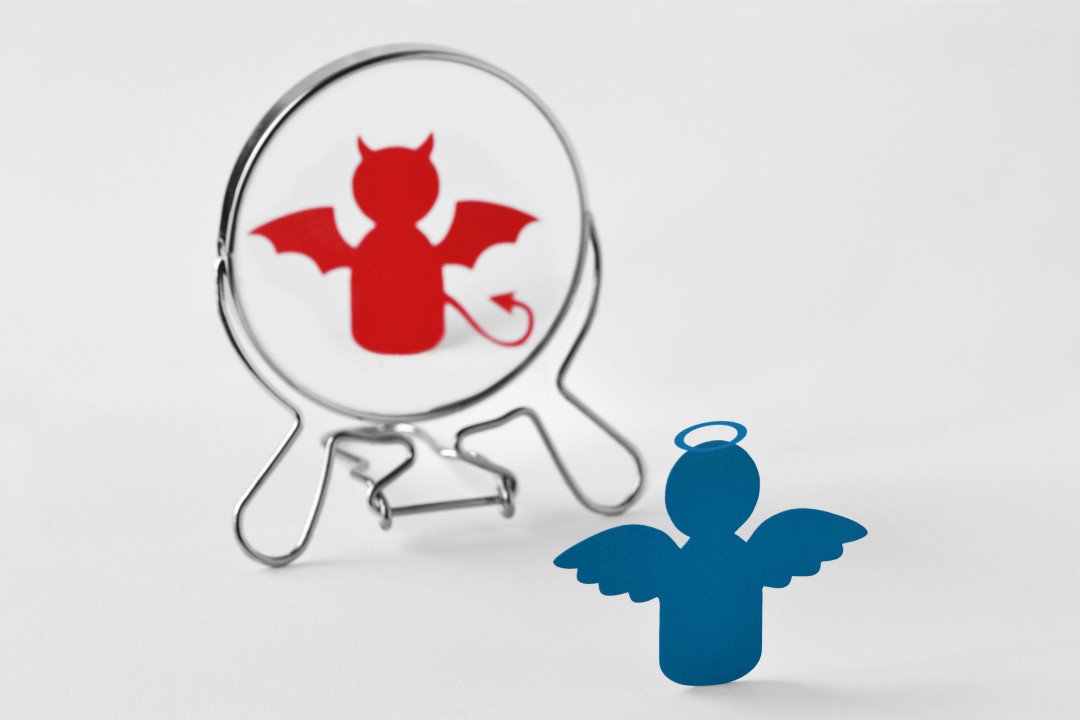
I started to consider: What if I am the jerk, and I didn’t know it?
What if you are?
This is the concept I’d like to explore further, starting on the playground in fourth grade. In preparation for the new school year, my Mom took me back-to-school shopping. I needed a new coat, and after looking at several different options, I was attracted to a gold windbreaker with a brown collar. Yes—gold! I don’t remember why I chose it, but I remember liking it, so that is what we brought home. I proudly wore it to school the next week, out on the playground at recess. After the bell interrupted kickball or four square or whatever we were playing, we all headed back to our classroom. That is when I heard it: “hey, space face!” Rory Daniels was behind me, and while I didn’t turn around, I knew he was yelling at me and referencing my gold jacket. Rory was acting like a jerk. I didn’t want to give him the satisfaction of responding, so I just ignored him, but I could hear the laughter of the other kids. I never wore my gold jacket to school again.
We all have our Rory Daniels stories. The playgrounds are full of them. While those are some of the most obvious examples, sadly there are plenty which continue on into our high school, college, and adult years—gossip, dishonesty, being antagonistic, using information as power, fostering reliance, self-promotion, passive-aggressive behavior, and yes—bullying.
That same fourth-grade year in which Rory called me “space face,” I remember throwing a pine cone at Rebecca Gaines. Rory acted like a bully and a jerk, but so did I. Rebecca was a nice enough girl. I have no recollection of why I threw a pine cone at her, but I remember the “yard duty,” Mr. Skinner, benching me for it. Was this my only offense growing up? Hardly. Did I outgrow it? Let’s fast-forward and see.
Overall, I am proud of my behavior over my 30+ year career, however, that doesn’t mean I haven’t had my moments. I have definitely gossiped, engaged in passive-aggressive behavior, gotten defensive in the face of feedback, finger-pointed, made unpopular (bad) decisions, made sarcastic comments, sent the occasional snarky email, withheld feedback if I didn’t have faith in someone’s ability to change, etcetera. And, in the true test of the “No Jerks” policy, there have been a few occasions in which someone has screened me out of their life, or at least changed the dynamic of our relationship. So, in the eyes of at least a few people, I am the jerk.
But, here’s the thing—Rory Daniels wasn’t a bad kid. I wouldn’t have called him a jerk or a bully under normal circumstances. So, what was it about that day which motivated him to act like a jerk? Sadly, many factors can spur us to act in undesirable ways. Maybe Rory was showing off or trying to build himself up in the eyes of some other kid by trying to tear me down. Is it really that different as adults? Arguably, we are in competition with one another for limited promotional opportunities, limited budget, and limited resources. We may have competing priorities. We may view it as easier to generalize and cast someone aside than to have a difficult conversation and to provide challenging feedback. Perhaps we want to distract attention from our own insecurities. We all have baggage and emotional triggers we bring into these situations, and we can’t call on the wisdom, perspective, and self-confidence that come from experience we don’t yet have.
So what do we do about it? Here are some thoughts:
- Look in the Mirror—There are emotional “payoffs” for our behavior, even our bad behavior. It is much easier to believe that we were right or justified or even victimized in a given situation than to accept we did something wrong. We have the benefit of knowing our motivation and the context around our actions, but others don’t have that visibility. Nor do we have the visibility into the motivation and context around the actions of others. So it is important to be honest with ourselves. Sometimes we screw up, and we should own up to that.
- Hate the Sin, Love the Sinner—Rory wasn’t a bully or a jerk, although his behavior on that particular day was certainly bullying, jerky behavior. I tend to believe that our behavior is on a continuum. We’re not 100 percent jerks, nor are we 100 percent whatever the opposite of a jerk may be. We tend to exacerbate bad situations when we apply enduring labels based on our limited experience with people. Don’t get me wrong, I have encountered people who are so far down the jerk spectrum that I’m not going to bend over backwards to keep them in my life. But I do believe those cases are in the minority. Where you can, set boundaries around behaviors—not people.
- Practice Compassion—I believe that people who treat us poorly are suffering in their own right. A working definition of compassion is recognizing the suffering of another and having the motivational desire to alleviate it. So next time we are treated poorly by someone, instead of getting angry, let’s try getting curious about what is going on with them. Abraham Lincoln said, “I don’t like that man. I must get to know him better.” How things really are is frequently different from the meaning we attach to them. We should therefore assume good intent, not jump to conclusions, and seek additional information before making a judgment.
- Practice Self-Compassion—While we can recognize the suffering of another and want to alleviate it, we can also recognize our own suffering and take steps to alleviate it. Replaying regrets—situations in which we wish we could change our behavior—is a form of suffering, and potentially a symptom of depression. Dr. Kristin Neff is a researcher and professor at the University of Texas at Austin and has written several books on the topic of Self-Compassion. She breaks it down as follows. Start with mindfulness—identify the regret or pain in order to respond effectively. Then move on to kindness. Don’t beat yourself up over past events. Put aside your inner critic and rally your inner ally. Lastly, embrace our common humanity. We have all been there. We are not alone in our suffering.
- Solicit Feedback—We are all works in progress, so ensure a balanced view of your behaviors. Identify a trusted group of people who will provide you with authentic and meaningful feedback—both to cheer you on and to tell you hard truths.
- Caution with Labels—Things move so quickly in the business world that we frequently apply labels for efficiency. Sometimes those labels are products of judgments based on limited interactions, so practice caution before jumping to conclusions.
- Provide Feedback—People are capable of great change, but only if they are provided the appropriate coaching and guidance. Some believe that our greatest fear is being criticized. Perhaps a greater fear is of not being told the truth—not being provided the authentic feedback to grow and develop.
- Build Your Emotional Intelligence—Learn more about emotional intelligence—your self-awareness and social awareness of others, and how to identify and manage your motivations and triggers, as well as how to influence others. See Daniel Goleman for more.
- Flex Your Style—Repeated studies have shown that diverse groups outperform homogenous groups all of the time. However, diverse groups can take more time and effort to come together and work through the stages of forming, storming, norming, and performing. When we talk about diverse groups, we aren’t just talking about race, sex, sexual identity, etcetera; we are also talking about diversity of experience, perspective, and style. In life, business, and in management, it is imperative to be able to flex our styles to work with different people and see things from different points of view.
- Make Amends—Make amends with others and with yourself. If you feel wronged, it isn’t doing any good to keep playing the victim card. There comes a point when it is time to move on. If you are still beating yourself up over past transgressions, consider what you can do to put this behind you. Maybe you can make amends and fix a broken relationship; maybe you can’t. But again, there comes a point when it is time to move on.
Unfortunately, we all have people who play the villain in our lives. The worse news is that you and I have our turns playing the villain in the lives of others. Sometimes there is nothing we can do about that. The good news is that causing someone harm along the way doesn’t automatically make you a villain. If we keep from casting others in that role when we feel wronged, maybe we will be given the benefit of the doubt as well. As a side note, due to the wonders of social media, I was able to reconnect with Rebecca from fourth grade and apologize for that pine cone. She said she didn’t remember it. Not sure if I believe her.
* Rory and Rebecca’s names were changed for this article.
__________
Jeff Jacobs is a graduate of the Inner MBA 2022 and is a facilitator, organizational effectiveness consultant, talent development leader, and business partner.

Mastermind Meditate: Continuing the Journey
That’s when I came across Mastermind Meditate, a Texas-based mental wellness firm that specializes in neuroscience-based corporate mindfulness. When I saw that Mastermind offered a twice-yearly 60-Hour Mindfulness Facilitator Certification, I was immediately intrigued. I loved the idea of taking a six-month course that would expose me to a variety of expert teachers, deepen my mindfulness practice, and grow my voice and confidence as a facilitator of mindfulness experiences.
When I met with the CEO Dorsey Standish about joining the program, I was drawn in by her scientific background as an engineer and now neuroscientist who shares mindfulness from a research-backed perspective. I could relate to her story of leaving her engineering job in the corporate world to explore and share science-based mental health practices. I wanted to engage in a similar journey of changing worlds but bringing wisdom with me.
Enrolling in Mastermind’s Fall 2021 Mindfulness Facilitator Certification was one of the best decisions I have ever made because it truly accelerated my personal practice and helped me reach a deeper level of learning. All the learning occurred live, and I was able to connect virtually with like-minded people all over the world from my home in the South of France. The course provided a good mix of neuroscience learning, didactic mindfulness teachings, meditation practice, small group interaction, and practice facilitation. In addition to learning from Dorsey, we also heard from experts with diverse backgrounds in mindfulness and science like Dr. Adrianne Bagley, Janet Solyntjes, MA, and Dr. Marty Lumpkin.
In addition to deepening my personal practice, I also learned how to curate my own mindfulness classes using the Mastermind structure and a smorgasbord of tools like poetry, art, and science. I am grateful to the course for giving me the confidence to lead groups and support individuals with mindfulness meditation techniques backed by the latest neuroscience.
Since completing the course with Mastermind, I’ve progressed to leading larger meditation groups on Zoom (up to 50 people) and enrolling in Tibetan Shiné meditation training. Maintaining a deep personal practice while serving others and seeing them overcome their blockages brings me joy. With my training from Mastermind, I am now proud to play a frontline role in bringing a broader consciousness of mindfulness to my communities and world.
Are you too on a journey toward deepening your commitment to mindfulness practice and mindful living? As Seneca said, “When we teach, we learn.” Teaching mindfulness has been my biggest challenge and my most rewarding endeavor. I’d encourage you to join me in taking your next step with Mastermind’s program! Their next cohort starts in July 2022 and enrollment is limited, so apply today.
How to Explain the Inner MBA to Your Boss
So far, we’ve found that the Inner MBA is helping us become conscious leaders—people who are committed not just to our own growth and development but also to making a positive impact on the world.
Conscious leadership is something we can all benefit from, and the more of us who are committed to it, the better off the world will be.
What are your thoughts? How have you been explaining the Inner MBA to others?
Here are my thoughts, as Inner MBA alumnus of the first cohort in 2020–2021.
1. We are constantly learning and evolving
Inner work is the act of reflecting on our thoughts, feelings, and actions. This process is not always easy, but it’s necessary for us to grow as a person.
We’re constantly learning and evolving. We can’t stop this process. But we can make it better. We’re able to learn new skills and adapt to change. We are also able to see things from different perspectives, which helps us make better decisions about our lives, for us and for others.
Making the world a better place starts with ourselves. By constantly learning and evolving, we can be more aware of how we can contribute to the betterment of our planet.
We start by acknowledging that there is a lot of inner work to be done, and that includes healing our inner wounds from our childhood and generational trauma. We have to let go of what doesn’t serve us anymore in order to make room for new positive and uplifting thoughts and stories to come in, which will allow us to become more conscious and aware of our surroundings, near and far.
Learning is a lifelong process that can be done in many different ways, and it’s important to find the right methods for ourselves.
The human brain is an amazing and complex organ that has the ability to learn anything at any age (this finding is backed by science). We are always learning new things whether we realize it or not.
Consciousness is awareness of our surroundings and ourselves, which means we’re always making changes to our inner world as well as the world around us, knowingly and unknowingly.
An Inner MBA alumnus has a much greater awareness of what is going on in his/her/their inner life to be able to interact in a positive and uplifting way for their teams, and for the planet as an extension of their being and their work.
2. We’re not just focused on making money. We want to make our work a force for good.
As Inner MBA alumni, we want to make our work a force for good. We believe that we can create abundance and prosperity for all of us, while also serving the world and the people around us. We are committed to leading with integrity. We want to be a community that the world can trust, and we will do everything in our power to make sure that the people around us are proud of who we are and what we stand for as Inner MBA students and graduates.
How to connect a mindset of abundance with a servant’s heart? By connecting with others on a heart-to-heart level, actively listening and speaking our truth, and by creating an environment of love, lightness, trust, and deep confidence that allows to go above and beyond what we have ever experienced in our relationships.
Making money while being a conscious leader making our work a force for good is so much more than a marketing trick. It’s a real transformation of how we work, how we interact, how we see and understand each other, and how we do business.
3. We’re committed to our own growth and development
The more we heal and transform our inner game, the more we can show up better than yesterday and make a difference in our lives and in the lives of others.
This is an important step in our own growth and development.
We never emphasize enough the importance of self-care, and how it can help us grow as a person, cultivating a healthy relationship with ourselves.
We’re committed to our own growth and development because we know that, in order to be the best for our bosses, customers, colleagues, and families, it is necessary for us to be the best for ourselves first.
We believe that the key to unlocking our potential is by healing and transforming from within first, and to hold space for others to heal and transform as well, to embrace change instead of fighting it, and to drive up the positivity and happiness factors.
4. We’re passionate about making a difference in the world, to support the 17 Sustainable Development Goals set up by the United Nations
The 17 Sustainable Development Goals are the world’s most ambitious agenda for sustainable development. The goals were agreed to by all 193 United Nations member states in September 2015, and they are designed to end poverty, protect the planet, and ensure that all people enjoy peace and prosperity by 2030. These global goals aim at ending poverty, inequality, and climate change.
It is not possible to achieve these goals without the help of each and every one of us. If we want to make a difference in our world, we shall start with ourselves, in our daily lives, at home and at work, spreading it to our companies, our competitors, and the biggest companies that make the biggest impact in the planet’s use of resources.
5. We’re open to new ideas and ways of doing things. The Inner MBA is giving us access to some of the best thinking in the world on conscious leadership.
There are a lot of stresses that come with being in a leadership position. In order to make sure that we are helping our companies, we shall make sure that everybody has the best support system possible. This is where conscious leadership comes into play. Conscious leadership is much more than just being aware of what is happening around us but also knowing how to adapt and change as needed, as well as driving positive impactful change within our companies by applying the transformative leadership that we learned (or relearned) during our Inner MBA journey.
These last two paragraphs are about some of the best conscious leadership thinkers and what they have to say about important topics. We have many thought leaders, including Tara Brach, Jack Kornfield, and Daniel Goleman, amongst many other amazing transformative leaders.
Daniel Goleman is a psychologist who was the lead author of the bestseller Emotional Intelligence. Tara Brach is a well-known American Buddhist writer and teacher. Jack Kornfield is an author, Buddhist practitioner, Spirit Rock Meditation Center founding teacher, and one of the key teachers to introduce Buddhist mindfulness practice to the West. Tami Simon is an entrepreneur and founder of Sounds True, a multimedia publishing company that creates educational programs in the areas of personal transformation, spiritual exploration, wellness, health and fitness, and relationships. She is the one person at the origin of the Inner MBA, in collaboration with Scott Shute, former director of LinkedIn Mindfulness & Compassion Programs in 2020–2021 before venturing out on his own after the end of the first cohort of the Inner MBA, as well as Soren Gordhamer, who showed up every month by himself and with Karen May to hold space for the inner growth of Inner MBA students. Karen May is the former Vice President of People Development at Google, responsible for global learning and development, leadership development, and talent management, supporting learning for over 120,000 Googlers globally.
Sharing nine months with these amazing leaders has been a truly transformative experience, at our deepest core: recognizing our inner wounds, embracing change, understanding our IMMUNITY TO CHANGE—transformation leadership experience brought to us by Dr. Lisa Lahey. She leads the Personal Mastery component of a path-breaking new doctoral program at the Harvard University Graduate School of Education, designed to produce the public-sector equivalent of the “turnaround specialist.” A developmental psychologist and educator, and coauthor of Change Leadership and Immunity to Change, she led the research team that created the developmental diagnostic, now used around the world, for assessing adult meaning-systems.
__________
This article was written by Mrs. Gemma Serenity Gorokhoff (www.gemmaserenity.com) who was part of the first cohort of the Inner MBA in 2020–2021. She led the larger learning community, bringing together students twice weekly to put into practice the skills of active listening and deep transformation to the Inner MBA experience. She continues to host monthly meetings. To stay connected with her and with other Inner MBA alumni, besides joining the LinkedIn group, you can also sign up to her larger learning community email list by following this link: gemma-sascha.aweb.page/larger-learning-community

From Burnout to Bliss
To be clear, I am on this journey with you. I’m a “cautionary tale” of how to do it wrong but am mostly on the other side of it now. I don’t always get it right, but am delighted to share what I’ve learned as a founder who bootstrapped at first, but is now virtually obsolete in my own organization thanks to a great team and infrastructure.
What drove me to burnout in the past are edges I still work on, but once I brought them out of the shadows, they became gentler companions. Here are some of those edges.
- I’m afraid I’ll let people down if I don’t meet their needs – personally and professionally.
- This work is a bodysnatcher – most of us in the global space know this is one of our soul assignments. The stakes are high and there’s always much more to do.
- I’m afraid that if I’m not on top of everything, people will “find out” I’m not that smart. Imposter Syndrome has driven me to some extent.
- I came up in the 1980s “do more, be more, have more” culture; workaholism was a badge of honor.
- That same culture took the feminist message of “you can be anything” and hijacked it into “you have to be everything.” (For example, the Enjoli commercial – “The 8-hour perfume for the 24-hour woman”.)
- Lastly, if I slow down I’ll feel the deep pain of my former marriage.
I unearthed these edges while completing my Inner MBA via the work of Robert Kegan and Lisa Lahey. They believe that change often fails because people focus solely on behavior, but most efforts require changes to a person’s skill set and mindset. They posit: “Mindset transformation requires overcoming blind spots, unearthing our competing commitments, and freeing ourselves of limiting assumptions.”
In the course, I mapped out ways that block progress – why we don’t change despite the strong desire to change.
This was never meant to be public-facing, but we believe in radical transparency at Black Fox Philanthropy. I’m bringing that into the blogosphere.
This ‘Immunity to Change’ map shows how mindset, fear, and false beliefs kept me doing vs. being. My competing commitments and assumptions drove undesirable outcomes, contributing to burnout.
We are human “doings” – we’re wired for action – but at our core, we’re human BEINGS. It’s been my slow, decades-long learning to trust just “BEING”. Doing so has enabled me to be more effective on many levels as a visionary and one who leads vs. being in trenches where I don’t belong.
Let’s get tactical on how to bring more bliss into your lives while still caring for your mission and those around you. First, we don’t get to effectively play in the vision space without an infrastructure that supports us in successful work.
As a social entrepreneur, the visionary “app” is always running in the background. That’s a good thing – I can solve problems or connect dots effortlessly while “off duty”. But I have to have “off duty” time for this to happen. This harkens back to an article I read years ago: “Darwin Was a Slacker and You Should Be Too”. The piece highlighted how he and other giants worked just four hours per day. While I cannot turn off my entrepreneur brain except in meditation, or absorbing activities like skiing really fast or sleeping, the GOAL is to work four hours per day maximum, including meetings.
His post isn’t about having it all figured out, but to share hacks I’ve discovered along the way. Here are some of my hacks that can fit any situation.
- Mindset Shift | My company isn’t about me; it’s about the Mission. The North Star question became: What does Black Fox Philanthropy need? My key question: What does Black Fox Philanthropy need from me?
- The Firm needs me to be grounded and supported, my wellbeing a priority.
- The Firm doesn’t need me to take care of everyone, to put others’ needs above my own at the expense of the Mission.
This new lens enabled me to make hard decisions that resulted in greater overall health, sustainability, and boundaries for myself. It set me free from feeling I needed to hold up the sky alone. It was a false belief that ultimately limited our impact.
- Part-time Virtual Assistant | My virtual assistant has supported me and the company 10 – 20 hours per week for over three years. That would be time I would have spent on areas that weren’t my zone of genius and would’ve resulted in working 50+ hours per week, with diminishing returns per hour.
- Fractional COO | In 2019, we weren’t able to keep up with the demand for our services. We didn’t have a solid infrastructure and team in place to smoothly onboard and serve new clients at the pace at which they needed our support. The result was a waiting list, so I sought a fractional COO with Executive-level talent who had systems and operations as their main zones of genius. This was game-changing. While the COO was 15-20 hours per week for the first 90 days, after a Project Manager was hired, she scaled back on the number of hours to more of a strategic advisor role. She’s a vital thought partner on all things Black Fox Philanthropy, helping to optimize operations.
- Daily Mindfulness Practice | Centered around abundance, gratitude, and calling in more light to my energy for the highest potential of Black Fox Philanthropy. I know that leading this firm is one of my soul assignments. I humbly and delightedly carry out that assignment with as much support as the Universe provides – which is significant. I also set my intention for the day saying a prayer of gratitude that I get to do this work in a community with giants. My prayer at convenings includes, “May I go where I’m needed most today”.
- Granular Hacks | This post is not about having it all figured out; I don’t. But we all have discovered hacks along the way. I’ve shared some higher-level hacks, now here are some more granular hacks.
- Ruthless with EMAIL: Do, delegate, delete. If it’s mine to do and takes two minutes or less – DO IT – I don’t look at it twice.
- To streamline, I ask that team members put in the email subject line: “3 minutes or less – response needed by X date/time.
- SOS Score, Scale from 1 – 10. I’d do this in my weekly meeting with our COO and during crunch times – I would give her my SOS score, and we would talk about what needed to happen to lower it.
- “Do It Ugly” but get it done. (Internal company FAQ: What’s up with all of Natalie’s typos? I type 100 wmp, going for speed and moving something forward if it is an internal communication.)
- “The ugly first draft” – curate the content, but have someone else do the ugly first draft, like Fancy Hands. With that ugly first draft, I can craft it into my own voice and perspective. For example, I sent my outline for the Skoll webinar to a team member who then created the first draft of this blog.
- If someone can do something 80% as well as I can, delegate it. Good enough is good enough.
- Litmus test: Does doing this map accomplish my priorities? Does this move X forward? (My current lens: Does this help move $1B in new funding into the hands of proximate leaders in the Global South?). If it doesn’t map to my priorities, is it FUN? It’s always fun, it’s always an honor to teach – I say yes to things that bring me joy.
- Giving myself permission to slow down, enjoy the success and relationships – seek a depth of connection in my work with colleagues and clients. I give myself permission to take a walk if needed. Write yourself a “Permission Slip” if that helps. Take the work seriously, but not yourself. Enjoy yourself!
May you find the bliss you seek so that you can be a more effective leader and human the world needs all of us to be!